The Queue That Never Forms: London’s Growth Companies and the Private Capital Default

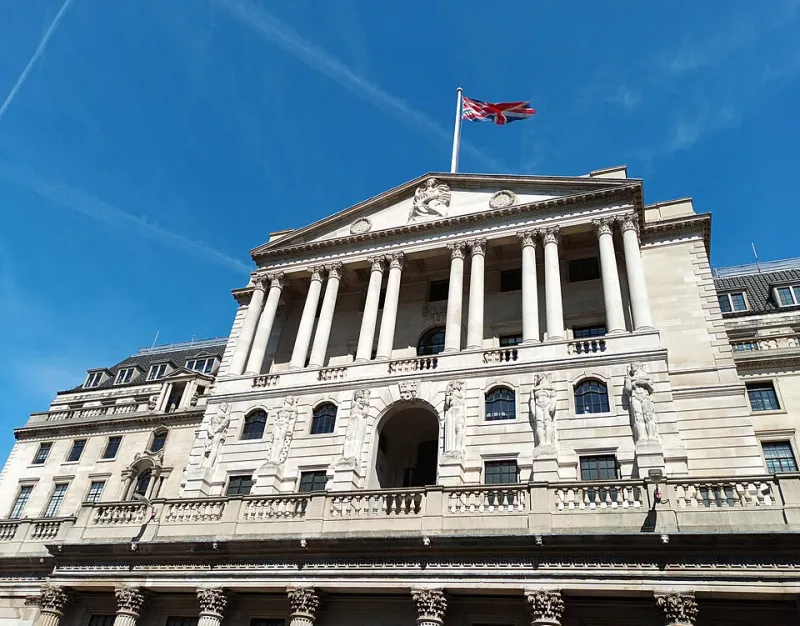
Photo: gren, Public domain, via Wikimedia Commons
A market that has lost its rhythm
There was a time when a London listing was the natural finishing line for a successful British growth company. That assumption now looks dated. As 2026 draws to a close, the initial public offering calendar remains thin, and the more telling signal is not the deals that have been pulled but the companies that never entered the queue. Founders, venture backers and private equity owners increasingly treat the public market as one option among several, and often not the preferred one.
For UK equity income investors, this matters more than the headline shortage of floats suggests. Income portfolios depend on a replenishing universe. Today’s FTSE 100 dividend payers were yesterday’s mid-caps and small-caps. If the next generation of growth companies spends its formative years in private hands, or lists in New York, the pool from which future UK income is drawn becomes narrower and older. The market can still function, but it becomes more concentrated and less representative of the domestic economy.
The valuation gap is real but not the whole story
The standard explanation is the valuation discount. UK equities have traded below US and European peers for much of the past decade, and a founder considering a listing can see the arithmetic plainly. Why accept a lower multiple in London when private capital is available at a higher mark, or when a US exchange offers deeper liquidity and a broader analyst following?
That diagnosis is correct as far as it goes, but it is incomplete. The discount reflects a demand problem as much as a supply problem. UK pension funds and insurers have reduced their domestic equity allocations over many years, while retail flows have often favoured global funds. A listing needs a credible buyer base, not just a good company. When the domestic investor base is thin, the marginal IPO becomes harder to price and easier to postpone.
There are other frictions. Research coverage for smaller companies has shrunk. Trading liquidity is concentrated in a small number of large names. The administrative burden of being public is material, and the scrutiny can be uncomfortable for companies with long investment horizons. Private markets offer patient capital, less disclosure and a single controlling shareholder group. For many founders, that is not an escape from accountability; it is a more congenial form of it.
Private capital has become the default
The private capital industry has also changed. Buyout funds, growth funds and private credit providers now hold substantial dry powder and can write cheques large enough to keep a company private for longer. The result is a lengthening private life cycle. Companies that might once have listed at a certain scale now stay private until they are larger, by which point a US listing or a trade sale may be more attractive than a London float.
This creates a two-tier market. The public market retains the mature, cash-generative businesses that income investors know well. The private market captures the growth phase, where capital gains are often made. UK savers can access private markets through pension schemes and specialist funds, but the ordinary equity investor has limited exposure. The public market becomes more of an income market and less of a growth market. That is not necessarily a failure, but it is a structural shift that income investors should understand.
What the reforms can and cannot fix
The policy response has been substantial. The FCA has reformed the UK listing regime to make it easier for companies to retain dual-class structures and to reduce some disclosure requirements. The prospectus regime has been reviewed, and the new private intermittent securities and capital exchange system, known as PISCES, is intended to create a bridge between private and public markets. These are sensible steps. They address genuine frictions and signal that London wants to be competitive.
But regulation cannot manufacture demand. A listing regime can make it cheaper and simpler to float, yet it cannot force UK institutions to buy the resulting shares. Nor can it close the valuation gap on its own. The more important work lies in rebuilding the domestic investor base, improving research coverage and making the public market a credible home for growth companies. That is a slower, less photogenic project than a rule change, but it is the one that determines whether the pipeline returns.
The income investor’s test
For equity income portfolios, the practical question is not whether London recovers its IPO momentum in 2026. It is whether the market continues to offer a diversified set of dividend-paying companies with credible growth prospects. The answer is still yes, but the margin of safety is thinner. Concentration risk is rising, and the choice between UK and global income is becoming less about valuation and more about access.
Investors should watch three things. First, the pace of new issues in sectors where the UK has genuine strengths, such as financial services, healthcare and technology. Second, whether private companies eventually choose London when they do list, or treat the UK as a stepping stone to New York. Third, whether the reforms produce a durable improvement in liquidity and research, rather than a one-off burst of activity. The IPO drought is not a crisis in itself. The gradual privatisation of growth is the deeper issue, and it will shape UK income portfolios long after the current cycle turns.