The Reference Price Illusion: London's Closing Auction and the Concentration of Certainty
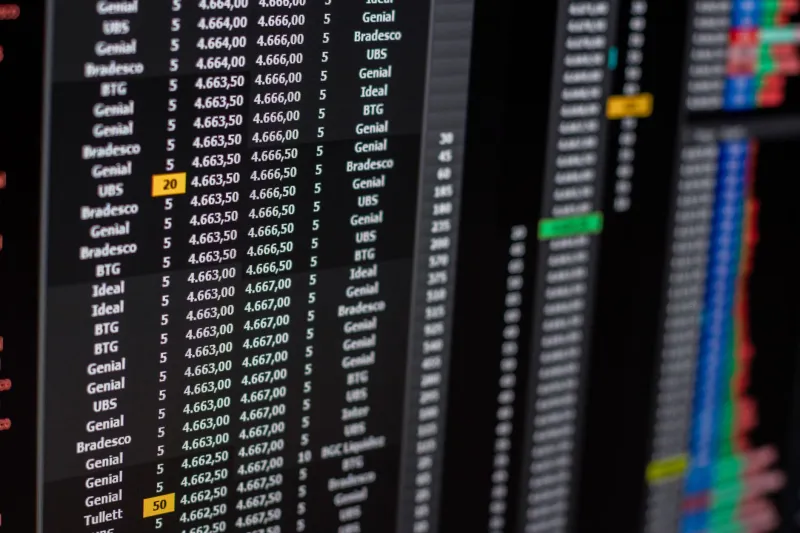
At 4:35pm on a London trading day, the market produces one of its most consequential numbers. It is not the last trade in the continuous book, nor necessarily the price at which most investors could have dealt during the afternoon. It is the closing auction print: a single, centrally determined price that then travels into net asset values, index calculations, performance benchmarks, collateral schedules and valuation committees across the UK fund management industry.
The closing price has always mattered. What has changed is the weight placed upon it. As passive investment has grown, and as execution desks have sought to minimise tracking error and market impact, a larger share of UK equity order flow has migrated towards the close. The result is a familiar market-structure trade-off: greater coordination around a single liquidity event, but also greater concentration of price discovery in a short, rule-bound window. For investors in London-listed companies - particularly those outside the FTSE 100 - the closing print deserves more scrutiny than it usually receives.
The migration to the close
Continuous trading remains the visible part of the market. It is where prices are quoted through the day, where news is absorbed and where most retail and institutional orders are executed. But the closing auction has become the reference point for a different set of participants: index trackers that need to trade at the official close, exchange-traded funds that create and redeem against closing prices, and valuation teams that require a single, defensible mark for illiquid or thinly traded positions.
This is not an accident of London market structure. It is a rational response to incentives. A passive fund seeking to match an index has little reason to trade at an arbitrary intraday moment when the benchmark itself is struck at the close. An ETF market maker hedging a creation order may prefer the certainty of the auction to the uncertainty of the continuous book. A valuation committee, meanwhile, prefers an official print to a subjective estimate. The closing auction supplies all three with the same answer.
The difficulty is that a reference price used by many is not necessarily a price set by many. Auction liquidity is concentrated by design. Orders are pooled into a single uncrossing event, and the resulting price reflects the balance of buy and sell interest at that moment. That is a legitimate mechanism. It is not, however, a neutral survey of opinion. It is an outcome shaped by the orders submitted, the participants who choose to submit them and the rules that govern how imbalances are handled.
Who sets the print?
In London, the closing auction is operated by the London Stock Exchange and follows a defined timetable in the late afternoon. Participants submit closing orders - often market-on-close instructions - and the auction uncrosses at 4:35pm. The process is transparent in the sense that the rules are published and imbalances may be flagged before the uncross. But transparency of process is not the same as breadth of participation.
A small number of large participants can have a disproportionate influence on the final print, especially in mid-cap and smaller companies where continuous liquidity is thin. A market maker managing inventory, a passive manager rebalancing a benchmark, or an arbitrageur hedging an ETF exposure may all arrive at the close with orders that are large relative to the stock's normal daily volume. Their reasons are legitimate and often risk-reducing. Collectively, however, they can make the closing price more a reflection of auction mechanics than of a broad, continuous meeting of minds.
This matters for the way investors interpret valuations. A dividend yield, price-to-earnings ratio or index weight calculated from the closing price inherits the characteristics of that price. In a FTSE 100 name with deep continuous liquidity, the closing auction is one important liquidity pool among several. In a FTSE 250 or AIM company, it can be the dominant pool of the day. The same official print then carries very different informational weight depending on the stock.
The mid-cap investor's blind spot
Mid-cap investors often treat the closing price as a settled fact. It is the number on the screen, the number in the factsheet and the number used to assess whether a stock looks cheap or expensive. But in thinner markets, the closing auction can be where the day's largest order imbalance is resolved. A stock may have traded in a narrow range for hours, only to move sharply in the final minutes as auction orders are matched. The move is not necessarily wrong, but it is not a consensus reached by a wide body of continuous buyers and sellers either.
For income-focused investors, the implication is practical rather than alarmist. Dividend cover, yield and total-return calculations should be read with an awareness that the denominator - the share price - may have been set in a concentrated event. For fund selectors, it argues for asking how a manager values mid-cap holdings and whether fair-value pricing is used when the official close looks stale or distorted. For company boards, it is a reminder that buyback timing and corporate actions interact with auction liquidity in ways that can affect the observed price.
A convention worth questioning
The closing auction is not a flaw in London's market structure. It is a useful coordinating device, and its growth reflects genuine demands from passive and benchmarked investors. But it is a convention that concentrates certainty into a single print. The question for UK market participants is not whether the 4:35 price should exist. It is whether too much institutional weight is being placed on a price that a relatively narrow set of order flows can shape.
That question becomes more pointed as London's equity market continues to evolve: overseas ownership is high, passive assets are substantial and mid-cap liquidity is uneven. A closing price is a reference, not a verdict. Investors who treat it as the latter may be granting more authority to the auction than the auction can bear.