The Price of Pause: UK Cash Holdings and the Real Cost of Waiting
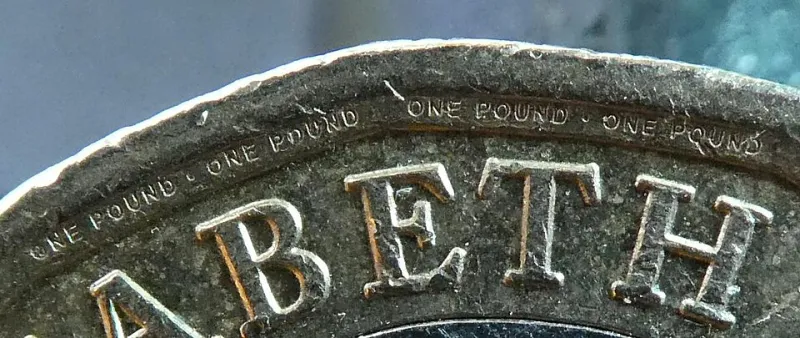
Photo: Tkbwikmed, CC0, via Wikimedia Commons
Safety Is a Choice, Not a Default
There is a comforting logic to holding cash. It does not fall in nominal terms. It can be accessed quickly. It avoids the daily noise of equity and bond markets. After the volatility of recent years, those qualities are understandable. But comfort is not the same as prudence, and in 2026 the UK investor’s cash balance deserves to be assessed as an active portfolio decision rather than a passive resting place.
The argument is not that cash is bad. It is that cash is a position with a return, a risk and an opportunity cost. When inflation is positive, that cost is real even if it is invisible on a statement. A saver who leaves a large balance in a low-yielding account is not avoiding risk; they are choosing a particular risk — the risk of erosion in purchasing power — over others.
The Normalisation Trap
As interest rates normalised, cash yields improved. That was welcome after years of near-zero rates. It also created a behavioural trap. Savers who had grown used to cash earning almost nothing suddenly found headline rates that looked attractive. NS&I products drew significant inflows, ISA cash balances remained popular, and many wealth managers reported clients opting to stay short-dated while they waited for clarity.
But headline rates are not the same as real returns. Once inflation, tax and the difference between average and best-buy rates are taken into account, the picture is less reassuring. A saver earning a competitive rate may still be losing ground in real terms. A saver in a legacy account paying a fraction of the market rate is almost certainly doing so. The longer the period, the more the gap compounds.
The normalisation of rates has also changed the calculus for advisers. Cash is no longer a zero-return asset, so it can legitimately play a role in a diversified portfolio. But that role should be defined. Is the cash held for emergency liquidity, for near-term liabilities, for tactical positioning or simply because the investor is unsettled? Those are different purposes with different appropriate balances.
ISA and NS&I Flows Tell a Behavioural Story
The popularity of cash ISAs and NS&I products is often presented as evidence of financial conservatism. It is also evidence of how strongly behavioural cues shape allocation. Cash ISAs are simple, familiar and tax-sheltered. NS&I carries the implicit comfort of a government-backed savings institution. Neither feature is irrational. But familiarity can crowd out a more rigorous assessment of time horizon, inflation and alternative uses of capital.
For many households, a robust cash buffer is genuinely the right answer. Emergency funds should not be invested in volatile assets. Near-term spending needs should be matched with liquid, capital-stable holdings. The mistake is not holding cash; it is holding too much of it for too long, or holding it in the wrong wrapper, or treating a temporary rate advantage as a permanent strategy.
Wealth managers in London have noticed the shift. Some clients who previously accepted equity risk have chosen to sit in short-dated deposits while awaiting a clearer macroeconomic signal. That sounds disciplined, but it can become a form of market timing by another name. The clarity clients seek rarely arrives in a neat, investable form. By the time the outlook feels comfortable, much of the return may already have been captured by others.
The Real Cost Is Not Always Visible
The inflation-adjusted cost of waiting is easiest to see in a simple calculation. If cash earns less than inflation after tax, its purchasing power declines. But the fuller cost includes what the investor might have earned elsewhere. That does not mean every saver should abandon cash for equities. It means the comparison should be explicit.
For a saver with a five-year horizon, a diversified portfolio of bonds and equities may offer a higher expected real return, with greater volatility. For a saver with a six-month horizon, cash is likely to be the better match. The error lies in using a short-term instrument for a long-term objective because the short-term instrument feels safer. In fixed income terms, cash is a very short-dated asset. It has low duration and low credit risk, but it also has limited scope for real return. Investors who need duration, income or inflation protection should not expect cash to supply it.
There is also a tax dimension. Cash interest outside an ISA is taxable, and higher-rate taxpayers face a lower personal savings allowance. The tax drag can turn an apparently decent nominal yield into a modest real return. ISA cash avoids the tax charge but not the inflation charge. NS&I products vary in their attractiveness, and the headline rate is only one part of the assessment.
A More Honest Framework
The sensible response is not to demonise cash but to tier it. First, maintain an emergency reserve sized to actual commitments. Second, match near-term liabilities with cash or short-dated fixed income. Third, invest the remainder according to time horizon, risk tolerance and real return objectives. That framework is unglamorous, but it is more honest than treating cash as a neutral default.
For UK investors in 2026, the question is not whether cash is safe. It is what kind of safety is being purchased, at what price, and for how long. In a world where rates are normalising but inflation has not disappeared, those questions deserve a direct answer.