The Mood Is Not the Market: UK Investor Sentiment and the Allocation Trap

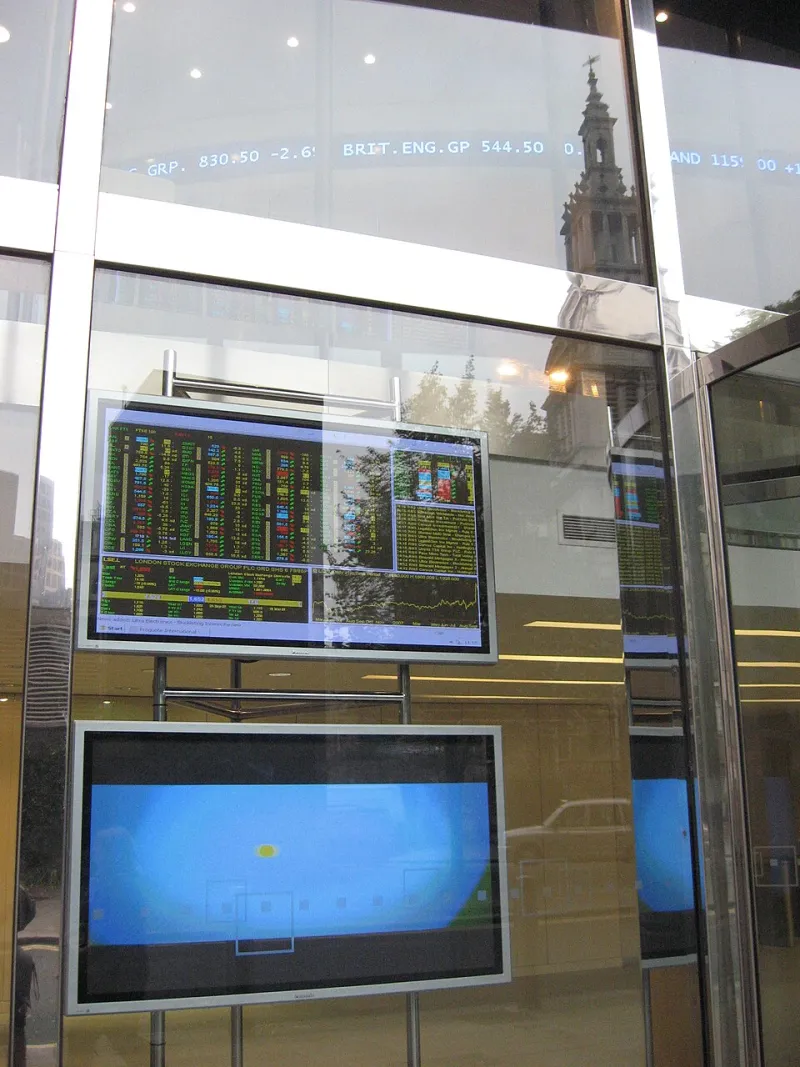
Photo: mattbuck (category), CC BY-SA 4.0, via Wikimedia Commons
In the final quarter of 2026, the UK investment conversation remains dominated by a familiar refrain: the country feels worse than the numbers suggest. Consumer confidence measures are still fragile, fund-manager surveys carry a cautious tone and much of the commentary around London-listed equities assumes that domestic investors have retreated. The flow data are more ambiguous. Retail money has not abandoned UK equities in a single, clean wave; allocations have shifted, stalled and selectively returned. That divergence between felt gloom and actual capital movement is the sentiment gap, and it matters because it can distort decisions long after the headlines have moved on.
Three measures, three different messages
Consumer confidence, fund-manager sentiment and retail flows are often treated as if they describe the same thing. They do not. A household confidence index tells us something about how people feel about their own finances, job security and the cost of living. A fund-manager survey tells us how professional investors are positioned relative to their benchmarks and what risks they regard as most acute. Retail flow data tell us what intermediaries, platforms and savers are actually doing with money.
Each measure can be useful. None is a direct forecast of equity returns. A saver can feel gloomy about the UK economy while continuing to contribute to a workplace pension. A fund manager can be underweight UK equities while still holding a substantial income portfolio of London-listed shares. A retail platform can report outflows from one fund category while passive vehicles and direct equity holdings attract money elsewhere.
The confusion is compounded by the nature of the UK market itself. London-listed large caps are not a pure play on UK domestic demand. Their earnings are drawn from global sectors, commodity cycles, financial services and overseas consumers. Headline gloom about the British economy may therefore say more about politics, mortgage costs or public services than about the cash flows underlying a FTSE 100 dividend portfolio. That does not make the gloom irrelevant. It makes it a poor shorthand for investment risk.
Why sentiment is a poor timing tool
Sentiment indicators are backward-looking by design. Surveys capture recent experience, recent price moves and the tone of public debate. They can remain negative for long stretches while markets recover, and they can turn euphoric just before a setback. Flows are similarly reflexive: retail investors tend to buy after performance has improved and sell after it has deteriorated. Using either as a short-term timing signal is usually an exercise in confirming what has already happened.
There is a more defensible use for sentiment: as a contrarian check at extremes. When pessimism is broad, persistent and reflected in valuations, positioning and flows, the market may already have discounted a great deal. But gloom alone is not a buy signal. It becomes useful only when it is extreme, when expectations are low enough to absorb bad news and when there are signs that fundamentals are stabilising. In late 2026, UK sentiment is subdued, but it is not obvious that it has reached capitulation. Treating it as a mechanical trigger would be as careless as ignoring it altogether.
The allocation trap for savers and advisers
The practical danger is not that investors feel gloomy. It is that they allow a headline mood to override a long-term plan. A saver approaching retirement may reduce equity exposure after a period of poor returns and negative news, only to lock in the effect of a drawdown just as valuations improve. An adviser may face client conversations dominated by the UK’s political and fiscal narrative, even when the client’s actual exposure is to companies earning most of their revenue overseas.
This is where the distinction between the UK economy and UK-listed companies becomes essential. It is not an argument for overconcentration in domestic equities. It is an argument for deliberate allocation. A policy benchmark should reflect time horizon, income needs, liquidity and risk capacity, not the tone of the latest survey. Rebalancing should be rules-based where possible. Cash holdings should be judged against their opportunity cost, not treated as a neutral refuge from uncertainty.
For income-seeking investors, the temptation is particularly strong. A high headline yield can look like compensation for gloom, but it can also signal dividend risk. The answer is not to abandon London-listed equities in a mood of resignation, nor to buy them simply because they feel unloved. It is to test dividend cover, balance-sheet strength and the geography of cash flows. Sentiment can frame the question. It cannot answer it.
Reading the signal soberly
The sentiment gap should be monitored, not worshipped. A sensible framework combines survey data with fund flows, valuation dispersion, earnings revisions and positioning. When those measures align at an extreme, contrarian opportunities may emerge. When they conflict, the correct response is usually patience rather than a dramatic change of course.
For Sentient Capital London, the lesson for UK savers and advisers is straightforward. Headline gloom is information about the mood, not a verdict on the market. It can sharpen questions about valuation and risk. It should not be allowed to set the allocation. The portfolios that survive are usually the ones built to endure a range of moods, including the one currently on display.